Individual Freedoms
As its name suggests, the Quebec Liberal Party is all about respect for individual freedoms. Whether it's a bill, regulation or government program, the first concern of a liberal mind is to ensure that it will not result in unjustified restrictions on individual freedoms. Any limitation of these freedoms, to be acceptable, must be justified by a higher good, which must be conclusively established.
Play video
Some liberal achievements
1991
McDougall-Gagnon-Tremblay agreement on Quebec's full autonomy in immigration matters
1975
The Bourassa government has the National Assembly adopt the Quebec Charter of Human Rights and Freedoms.
1973
Creation of the Conseil du statut de la femme
1964
At the instigation of Marie-Claire Kirkland, the law on the legal capacity of married women is passed
1940
Adélard Godbout's Liberal government grants women the right to vote in Quebec.
1914
To ensure the quality of Quebec's developing road network, Lomer Gouin's Liberal government created the Department of Highways, which became the Ministry of Transport on September 12, 1969.
Economic Development
The Liberal Party has always been committed to promoting both economic and social development in Quebec. Because it creates the wealth on which a society must rely to finance its social development, economic development has been a major preoccupation for every Liberal government of the modern era.
Play video

Some liberal achievements
2015
Launch of the Plan Nord
2007
30 billion invested in public infrastructure
1971
Construction begins on the gigantic James Bay hydroelectric complex launched by Robert Bourassa, the largest construction site in Quebec's history and the largest in the world at the time.
1965
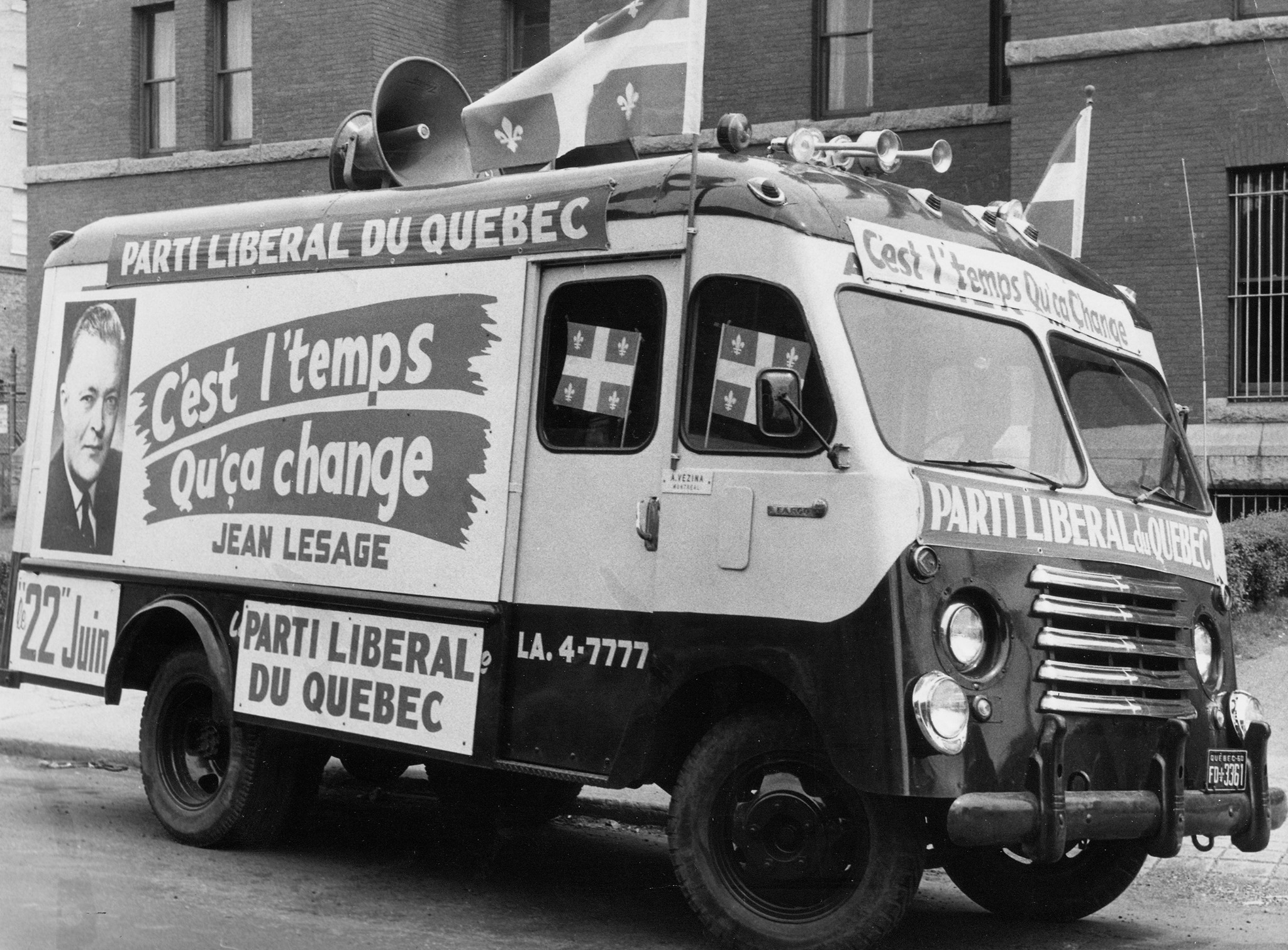
The Liberal government of Jean Lesage has the Legislative Assembly pass a law establishing the Caisse de dépôt et placement.
1963
The Liberal government of Jean Lesage nationalizes electricity production and distribution companies.
1960
Quiet Revolution: Nationalization of electricity and new mandate for Hydro-Québec.
1944
Creation of Hydro-Québec by the Liberal government of Adélard Godbout.
1928
Taschereau's Liberal government created the Workers' Compensation Board to settle disputes and set compensation amounts.
1921
The government led by Liberal Louis-Alexandre Taschereau created the Commission des liqueurs to control the quality and sale of alcoholic beverages (wines and spirits).
1921
The Liberal government of Louis-Alexandre Taschereau creates the first public assistance law, the first major social welfare intervention in Quebec's history.
A Sense of Belonging to Quebec
A sense of belonging to Quebec begins with identifying with its French-speaking majority. This means accepting the aspirations of this majority, as well as its history, language and culture, institutions, lifestyles and particularities. The Quebec Liberal Party recognizes the special character that the French-speaking majority confers on Quebec society, and is committed to always asserting and defending the French character of Quebec. Above all, it is committed to being a party with a clear French-speaking preponderance, without prejudice to the equal rights of all its members.
Play video
Some liberal achievements
2018
Philippe Couillard's Liberal government introduces "Partout, la culture", the second major cultural policy in Quebec's history.
2014
Launch of Quebec's Digital Cultural Plan
1987
Adoption of the Status of the Artist Act by Robert Bourassa's Liberal government
1974
Robert Bourassa passes the Official Language Act or Bill 22, the first law to enshrine French as the official language of Quebec.
1972
Under the leadership of the Liberal Minister of Cultural Affairs, Claire Kirkland-Casgrain, the Cultural Property Act was passed
1963
The Liberal government of Jean Lesage passes a law making the white fleur-de-lys the floral emblem of Quebec. The fleur-de-lys is a cherished historical symbol for Quebecers.
1961
Creation of the Ministry of Cultural Affairs and a Quebec delegation in Paris
Social Justice
A society that focused exclusively on the exaltation of individual values would quickly become a selfish society. Sooner or later, its stronger members would dominate, to the detriment of its weaker members. Without necessarily being poor, many low-income individuals and households would be deprived of access to services such as education and healthcare, which they cannot access on their own. A pooling of resources is therefore necessary to ensure reasonable equality of opportunity for all, and a minimum of justice throughout society.
Play video

Some liberal achievements
2009
Creation of Quebec's first anti-homophobia policy by Jean Charest's Liberal government
2007
First time we've seen parity between men and women in the Council of Ministers
2006
Thanks to the Quebec Parental Insurance Plan, which came into effect on January 1, 2006, Quebec has become a "family paradise".
1974
In 1974, Robert Bourassa's Liberal government replaced the various social allowance programs with the Régime des allocations familiales du Québec.
1971
Creation of the CLSC network under the Liberal government of Robert Bourassa
1970
Robert Bourassa's Liberal government introduces the Quebec Health Insurance Program to provide all citizens with free access to health care.
1964
Under the Liberal government of Jean Lesage, Bill 60 comes into force, creating a Ministry and a Higher Council of Education.
1943
Liberal Premier Adélard Godbout legislates compulsory education for children aged 6 to 14.
Respect for civil society
The term "civil society" is generally used to refer to all human activities that take place in places other than the market and political society. Each individual and each group has its own conception of life and its own values. Instead of trying to impose its own conceptions at all costs, the state should seek institutional arrangements which, while respecting public order and morality, take account of the constant evolution of opinions and modes of behavior.
Play video
Some liberal achievements
2008
Adoption of the new Civil Code
1994
Enshrining equality between men and women in the Quebec Charter of Rights and Freedoms
1975
The Bourassa government has the National Assembly adopt the Quebec Charter of Human Rights and Freedoms.
1944
Adéralrd Godbout's Liberal government passes the Labour Relations Act, recognizing the right to unionize for the first time.
Political life under the banner of democracy
The Quebec Liberal Party has acted to ensure that all parties are treated equally, that election officers are accountable for their actions before the courts, that election expenses are limited and controlled, and that fraudulent voter substitution on polling days is prevented.
Play video
Some liberal achievements
2017
The Québec Ombudsman's mandate has been enhanced to deal with disclosures of wrongdoing against public bodies.
2015
From now on, the costs of renting space occupied by public bodies, as well as the annual allowances and salaries of ministers, cabinet directors and senior officials, will be published annually.
2013
The Quebec Liberal Party adopts a code of ethics and professional conduct.
2010
The Loi sur l'éthique et la déontologie en matière municipale is introduced by Jean Charest's Liberal government.
2010
Gradual implementation of the Code of Ethics and Professional Conduct for Members of the National Assembly, adopted under the Liberal government of Jean Charest
2006
The Québec Ombudsman is mandated to ensure that the rights of users of the health and social services network are respected.
1963
Jean Lesage's government changes the minimum voting age from 21 to 18.
1940
Adélard Godbout's Liberal government gives women the right to vote and to stand as candidates in provincial elections.
The Canadian Way
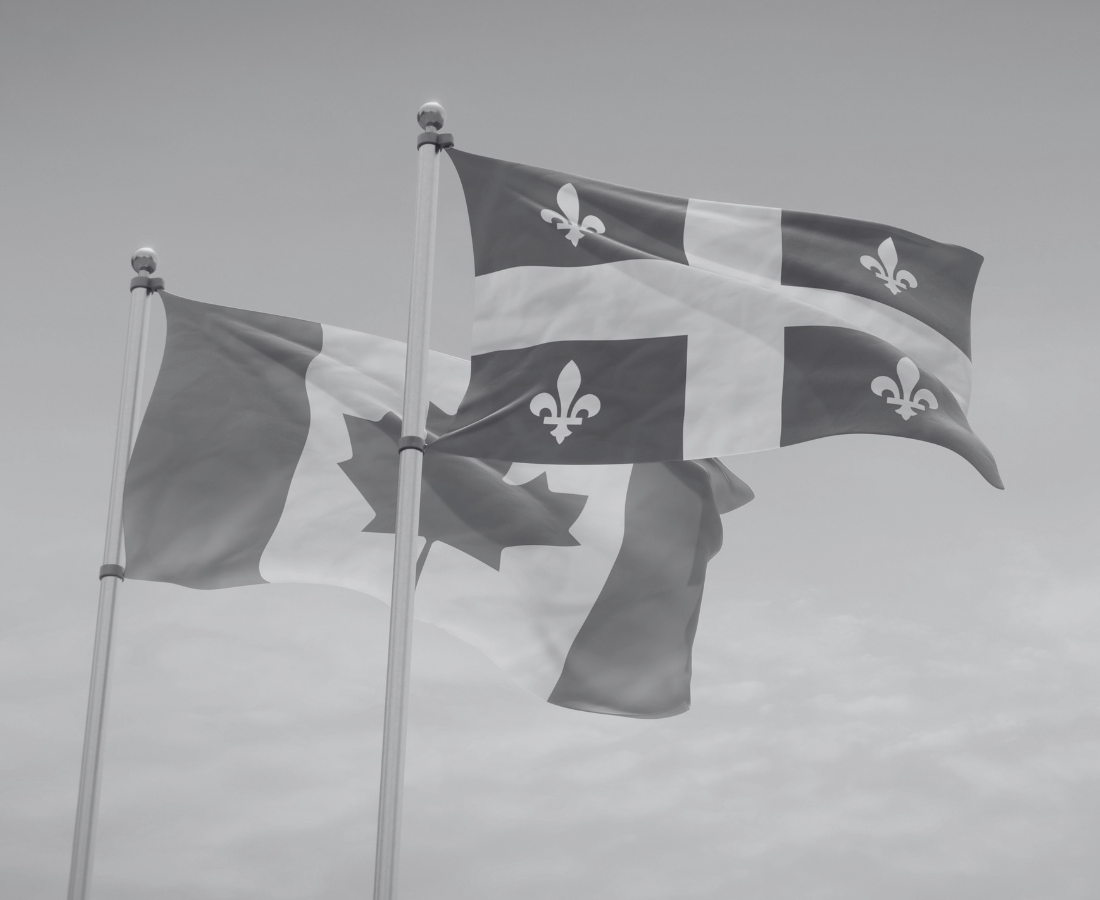
While adhering to Canadian federalism, the Quebec Liberal Party has always maintained that, as the principal expression of the French fact in Canada, Quebec cannot be simply another province within the federation. Through all its leaders to date, it has maintained that, in addition to being a province in the legal sense of the term, Quebec forms a distinct society in many respects, notably because of its language, culture, legal system, institutions and way of life. The Quebec Liberal Party is nevertheless convinced that maintaining the Canadian federal link is the most appropriate constitutional option to promote the best interests of Quebec and its partners.
Play video
Some liberal achievements
2014
Quebec and Ontario are committed to revitalizing relations between the two provinces in order to consolidate Central Canada's regional partnership.
2009
Birth of North America's 4th-largest economy with the Ontario-Quebec Trade and Cooperation Agreement (OQTCA)
2003
Liberal Premier Jean Charest creates the Council of the Federation, ushering in a new era of cooperation between Canada's provinces and territories.
Intergenerational Equity
Intergenerational equity defends the right of future generations to live in a society as prosperous and developed as those who helped build it. This principle urges decision-makers to think about public policy from a long-term, innovative perspective, so that the next generation does not have to suffer the economic, social and environmental repercussions of decisions taken by their predecessors. A responsible state must meet the needs of the current generation, without compromising the ability of future generations to meet their own needs. In the Quebec public debate, this notion is reflected in particular in the management of public finances and debt repayment, in pension plans and in the exploitation of our natural resources.
Play video
Some liberal achievements
2016
Couillard government achieves balanced budget for fiscal 2015-2016
2015
Québec adheres to the Protocol on Global Climate Leadership (Under 2 MOU).
2014
Philippe Couillard's government creates the Commission de révision permanente des programmes to put Quebec's public finances on a sustainable footing
2006
Passage of the Debt Reduction Act, which created the Generations Fund and instigated the debt reduction objectives
Protecting the environment and combating climate change
In November 2021, under the impetus of the Youth Commission, the members of the Quebec Liberal Party adopted a resolution to include a 9th Liberal value: environmental protection. As a result, every one of our party's actions is now considered from this angle. Action by a political party is all well and good, but more needs to be done. Society as a whole must follow suit. A Liberal government will include the right to preserve the environment and biological diversity among the fundamental rights protected by the Charter of Human Rights and Freedoms.